
What Do Activated Carbon Filters Remove From Tap Water?
Magnus JernShort answer: Standard activated carbon removes or reduces chlorine and chloramine, chlorination by-products (THMs), VOCs, pesticides, herbicides and the bad taste and odour they cause — by adsorption, so it does not by itself capture dissolved salts (nitrate, fluoride, sodium) or soften water, and it keeps the healthy minerals. But a high-quality treated carbon block like the EcoPro goes further — reducing 95% of lead (NSF/ANSI 53), 100% of microplastics, 70% of fluoride, 30-70% of nitrate, 80% of limescale and more. The rule: match the carbon (and any extra layers) to the contaminants you actually have. Here's the full picture — plus a 2-minute video summary.
How do activated carbon filters work?
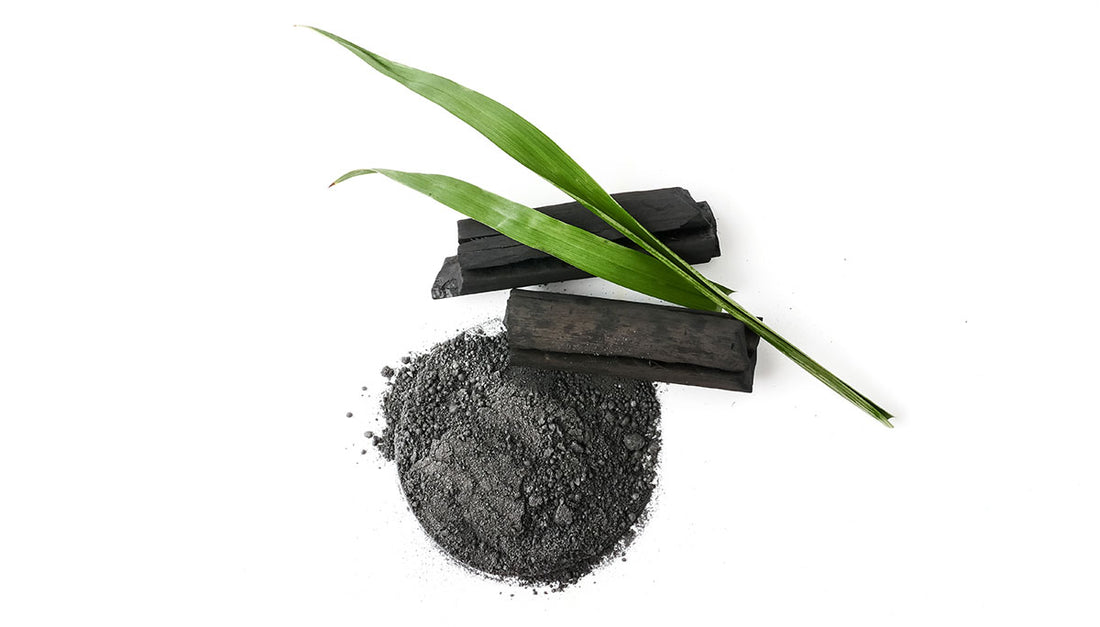
Activated carbon filters (also called charcoal filters) are made of small, porous carbon pieces — just 4 grams of activated carbon cover the area of a football field (≈6,400 m²). That huge surface area is what makes them so effective: as water flows through, chemicals stick (adsorb) to the carbon, leaving purer water. Effectiveness depends on flow and temperature, which is why smaller filters work best with cold water at low pressure.
Carbon quality matters too. Coconut-shell carbon has the best efficiency (carbon can also be made from wood or coal), sold as granular activated carbon (GAC) or carbon blocks. One of the world's top manufacturers is Sweden's Jacobi (used by TAPP Water), whose Aquasorb carbon is based on sustainable, fair-sourced coconuts.
- GAC (granular): loose granules; excellent for chlorine, taste and odour, but water can channel through, so it's less thorough with fine particles.
- Carbon block: compressed into a solid block with a fine (1-2 micron) pore structure; filters more thoroughly, adds mechanical filtration of fine particles and microplastics, and — when certified to NSF/ANSI 53 — reduces lead.
What does activated carbon remove and reduce?
Activated carbon adsorbs pollutants and the chemicals added to water, improving taste and odour. Standard carbon removes, among others:
- Chlorine: more than 90% removed.
- Chlorination by-products (THMs), most pesticides and herbicides, and many organic chemicals.
A treated/enhanced carbon block such as the EcoPro reduces considerably more (percentages per Tappwater's testing — verify against latest lab results):
|
Contaminant |
EcoPro carbon-block reduction |
|---|---|
|
95%+ |
|
|
Lead & Zinc (NSF-53) |
95% |
|
Copper |
95% |
|
Microplastics (1-2 micron block) |
100% |
|
Heavy metals (e.g. mercury) |
70% |
|
30-70% |
|
|
Lithium |
70-90% |
|
Arsenic / asbestos |
30-70% |
|
Limescale (new cartridge) |
80% |
|
Fluoride |
70% |
|
Microbial cysts (giardia, cryptosporidium) |
✅ |
Adding ion-exchange and/or ultrafiltration layers removes even more, including calcium (limescale) and pathogens. For non-potable or well water, TAPP provides an ultrafiltration filter.
What activated carbon doesn't filter
Despite handling 80+ contaminants, carbon alone does not remove:
- Healthy minerals (magnesium, potassium, sodium, calcium) — so TDS is generally not reduced by carbon (that's a good thing; see why TDS is a poor measure of water quality).
- Dissolved solids (minerals, salts, iron) not considered contaminants.
- Some microbiological contaminants (coliform, viruses, small bacteria) — standard carbon isn't a microbiological filter.
- Inorganic contaminants like arsenic and asbestos (only partially reduced) and radionuclides (reduced).
Microbiological contaminants: a common issue where infrastructure is poor (waterborne gastrointestinal disease). Generally the chlorine in tap water kills bacteria and viruses, which is why filtering them isn't necessary for public water in Europe/North America; carbon alone isn't sufficient for these. (Note: carbon does not remove coronaviruses — but these have never been found in disinfected tap water.)
Arsenic: common where groundwater is contaminated. Carbon removes 30-70%, not enough where arsenic is a real problem — combine with ion exchange. Read more about the best filtering technologies.
Do carbon filters need maintenance?
Yes — carbon only works while it has free adsorption sites. Once saturated it stops removing contaminants (and can release some back). Replace the cartridge on schedule; don't wait for the taste to change, because chemical breakthrough happens before you can taste it.
Conclusion
- Activated carbon is an exceptional filtration technology that solves many issues — but not all; choose a filter based on your specific contaminants.
- High-quality treated blocks like EcoPro enhance efficiency (lead, heavy metals, microplastics, some bacteria).
- Carbon retains healthy minerals, so it generally doesn't reduce TDS unless combined with other technologies.
- Carbon is also used as a stage in most Reverse Osmosis (RO), whole-house and UV systems.
- For dissolved salts (high nitrate/fluoride) or to soften very hard water, add RO or ion exchange. (TAPP vs Brita, PUR, Culligan, ZeroWater.)
FAQ
What do activated carbon filters remove? Chlorine, chloramine, THMs, VOCs, pesticides/herbicides and bad taste/odour — and, in a treated carbon block, also lead, microplastics and a share of nitrate, fluoride and heavy metals.
Do carbon filters remove lead? A treated carbon block certified to NSF/ANSI 53 (like EcoPro) reduces ~95% of lead. Loose granular carbon generally doesn't — check certification.
Do carbon filters remove nitrates or fluoride? Standard carbon doesn't, but EcoPro's treated block reduces ~30-70% of nitrate and ~70% of fluoride; for very high levels use reverse osmosis or ion exchange.
Do activated carbon filters remove minerals (TDS)? No — and that's an advantage: it keeps beneficial calcium and magnesium while removing chlorine and chemicals.
Does activated carbon remove bacteria or viruses? Not on its own; that needs ultrafiltration, UV or reverse osmosis.
GAC or carbon block — which is better? For drinking water, a certified block: finer pores, reduces fine particles/microplastics and, when certified, lead.
Sources
- CDC — Water filters (home water treatment): https://www.cdc.gov/healthywater/drinking/home-water-treatment/water-filters.html
- NSF — Carbon water filters (NSF/ANSI 53): https://www.nsf.org/knowledge-library/carbon-water-filters
- US EPA — Types of Drinking Water Contaminants: https://www.epa.gov/ccl/types-drinking-water-contaminants
- WHO — Drinking-water (fact sheet): https://www.who.int/news-room/fact-sheets/detail/drinking-water
- Lenntech — How activated-carbon adsorption works: http://www.lenntech.com/library/adsorption/adsorption.htm
- Minnesota Dept. of Health — Granular activated carbon: (mantener enlace original)


